





Self-confidence is the primary engine of human success; it is not just a passing feeling, but a “muscle” that can be trained and strengthened through consistent practice. In this article, we answer the most important questions about how to build your self-confidence in simple steps.
Self-confidence is the cornerstone of building a successful personality. Without it, skills and talents may remain trapped by fear and hesitation. Here are detailed answers to the most important questions that will help you in your journey of self-construction.
Q1: What is the true concept of self-confidence?
Self-confidence is a blend of self-efficacy (believing in your ability to accomplish tasks) and self-esteem (the feeling that you deserve happiness and success). A confident person is not someone who never makes mistakes, but someone who has the courage to admit them and learn from them without losing their self-worth.
Q2: How do I take my first steps in building confidence?
Building confidence starts from within through simple, practical steps:
- Stop Comparing: Social media shows us the “highlight reels” of others, not their reality. Compare yourself only to your previous self.
- Identify Your Strengths: Dedicate time to write down your achievements, no matter how small. Focusing on positives gives the mind energy to move forward.
- Mind Your Appearance and Posture: Body language affects brain chemistry; walking with a straight back and a slightly faster pace instantly enhances your sense of control and empowerment.
Read also: How to Develop Communication Skills in the Workplace
Q3: How can I overcome negative thoughts that destroy my confidence?
The critical inner voice is the greatest enemy of confidence. To counter it, use the “Positive Replacement” technique:
- Instead of saying: “I will definitely fail,” say: “I will do my best, and if I don’t succeed, I will learn a new lesson.”
- Instead of: “No one will care about my opinion,” say: “My perspective is unique and worth sharing.”
Q4: How do I overcome the fear of failure that shakes my confidence?
Failure is not the end of the road; it is a learning station. A confident person sees failure as feedback. The simple step here is to rename “failure” to “an experience that hasn’t succeeded yet.” Always ask yourself: “What did I learn from this situation?” instead of “Why did I fail?”.
Q5: What is the role of “Small Goals” in boosting confidence?
Very large goals can cause frustration if not achieved quickly. The secret lies in fragmenting goals. Every time you achieve a simple goal (like reading 10 pages or exercising for 15 minutes), your brain releases “success dopamine,” building cumulative confidence that pushes you toward larger goals.
Q6: What is the role of “Habits” in enhancing self-confidence?
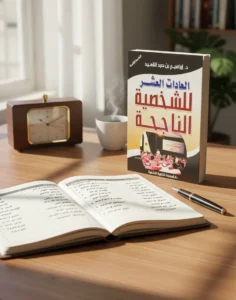
In his famous book, “The Ten Habits of a Successful Personality,” Dr. Ibrahim Al-Quayid emphasizes that success and confidence are the products of daily habits. Habit grants you “self-discipline,” and when you commit to what you promised yourself (like waking up early or reading), your self-esteem automatically rises. Discipline is the true fuel for sustainable confidence.
Q7: Does the surrounding environment affect the level of self-confidence?
Absolutely. An environment that showers an individual with constant negative criticism weakens confidence. Therefore, one of the essential steps is building a “support network” of positive people. Seek mentors and readers who share your ambition, and make Dr. Ibrahim Al-Quayid’s website and training content your reference for constructive ideas.
Q8: How to build your self-confidence in simple steps when facing an audience?
Many fear public speaking. The solution lies in mental and practical preparation:
- Positive Visualization: Imagine yourself speaking brilliantly before you start.
- Subject Mastery: Confidence comes from “knowledgeable fullness.”
- Continuous Training: Start with small groups and then expand.
Golden Tips
Here are additional steps to reinforce this:
- Continuous Learning: Knowledge is the fuel of confidence. The more you know in your field, the less you fear challenges.
- The Art of Saying “No”: A confident person knows their limits and values their time.
- Connection to High Values: Maintaining worship and inner peace grants you psychological stability, making you less affected by external criticism
Recommendations from Dr. Ibrahim Al-Quayid’s Books
To deepen your understanding and develop your skills professionally, we recommend these distinguished books from the Al-Quayid Shop:
- The Ten Habits of a Successful Personality: The primary reference for anyone seeking excellence. It provides a practical methodology for building a balanced personality.
- Valuable Lessons: Contains the essence of inspiring experiences and life wisdom to expand your horizons.
- Negotiation Skills and Arts: Learning negotiation gives you practical tools to handle difficult situations with steadiness.
Summary Table: Steps to Building Confidence
| Step | Direct Impact |
| Positive Self-Talk | Replacing discouraging thoughts with motivating ones. |
| Setting SMART Goals | Feeling achievement and control over life’s path. |
| Continuous Learning | Reducing anxiety caused by ignorance of situations. |
| Physical Wellness | Increasing energy, vitality, and satisfaction with appearance. |
“Confidence does not come from always being right, but from not fearing being wrong.”
Would you like to start today by applying the first step to building your confidence? You can begin by browsing Dr. Ibrahim Al-Quayid’s books to be your companion on the journey of change.